

Crossing the Pacific on 100% Electric Propulsion, No Generator
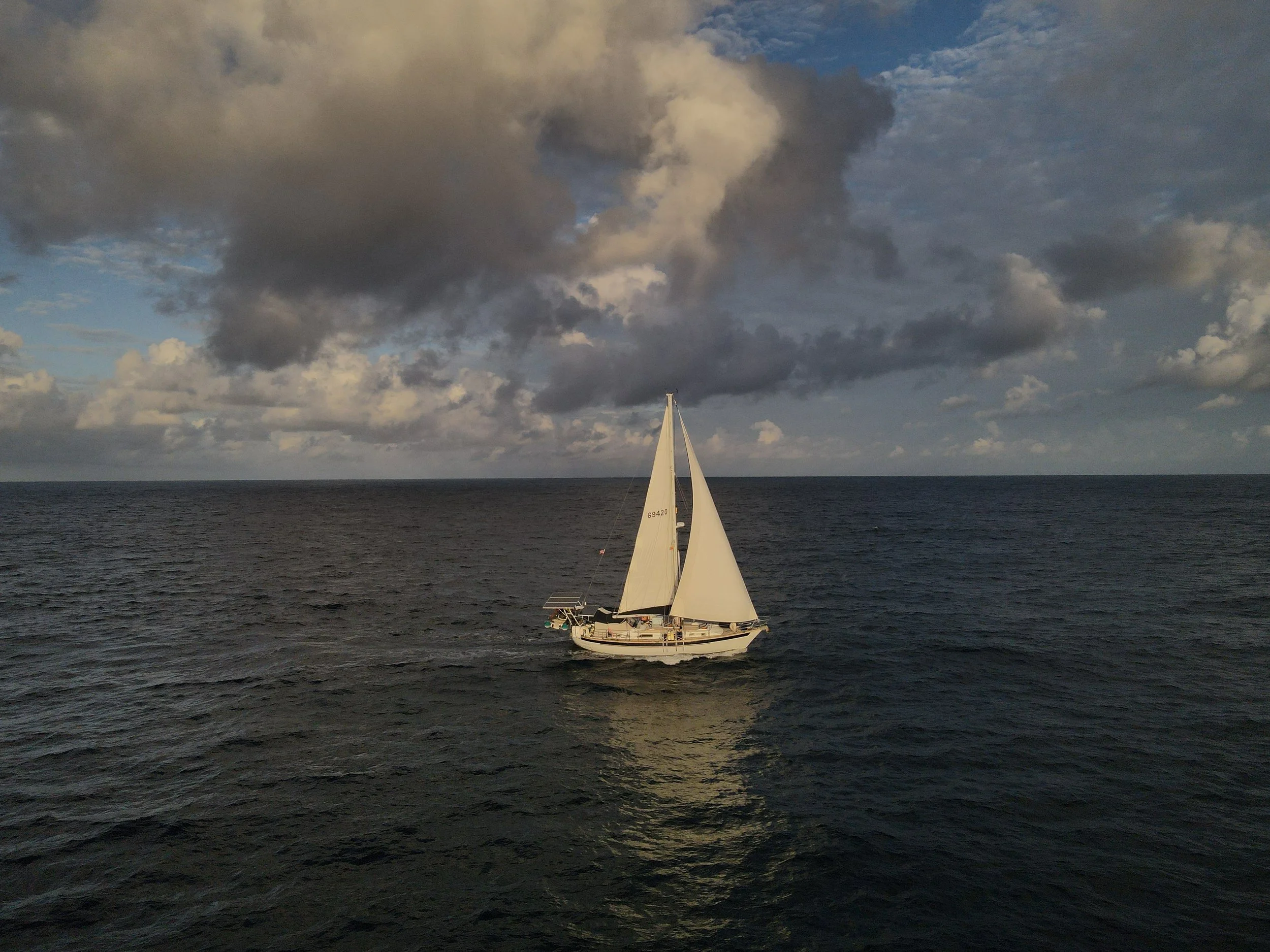
In mid-March 2024 we left La Cruz, Mexico, and 23 days later we dropped the hook in Nuku Hiva in the Marquesas. There was no diesel on board and no generator. Just a G22 electric motor, 33kWh of LiFePO4, four solar panels and the prop turning in the water under us.
When we got there, other cruisers asked us where to buy diesel. The honest answer was: I don't know. I don't need it.
The route
The Pacific crossing was one leg of a 10,000 nautical mile loop on Gemini, our Passport 42.
Two full seasons cruising the Sea of Cortez
La Cruz, Mexico to Nuku Hiva, Marquesas: 23 days at sea
Motoring and sailing through French Polynesia
Tahiti to Hawaii
Hawaii to Port Townsend, Washington
In two seasons in the Sea of Cortez we only needed shore power in the summer to recuperate from the AirCon usage every 4 weeks. If the bank got low, we sat at anchor for a day and let the sun do its job. That experience is what gave us the confidence to set a course to the Marquesas.
The boat and the system
Gemini runs the same system we build for clients. Nothing on the crossing was a prototype or a one-off.
Boat: Passport 42, full-time liveaboard
Motor: Powerflow G22, 22kW 48V
Battery bank: 3 x 11kWh BestGo LiFePO4, 33kWh total
Solar: 4 x 470W panels (1,880W): three on the arch, one over the bimini
Prop: Eco*Star 19", three blade, auto-pitching
Other charging: Regen under sail only. No wind generator, no alternator, no diesel
Monitoring: Victron Cerbo GX
The doldrums
The doldrums are where an electric boat gets tested. We motored for five days straight.
Our plan was simple: go slow and let the sun carry us. During the day we motored at about 3 knots, and the solar covered the motor with nothing coming out of the bank. At night we dropped to just over 2 knots and ran off the batteries. Then the sun came up and we did it again.
That works out to about 60 miles a day, roughly 300 nautical miles of motoring. We came out of the doldrums with the bank at 8%. That was the lowest it got on the entire passage.
The numbers
Regen: 7kWh a day. That's the average over all 23 days to the Marquesas. We measured it by switching off the solar input and watching input power on the Cerbo GX, so the number is regen and nothing else.
Range at 5 knots: about 6.5 hours on the bank alone.
Range at hull speed: about 2 hours. Speed is costly for batteries. Slow is how you cross an ocean.
Lowest state of charge: 8%, coming out of the doldrums.
Motor hours: over 3,000 of rotation between motoring and regen, with no physical maintenance on the motor.
Outside the doldrums we never motored for more than a day. We motored out of light air for hours at a time, and we motorsailed often when the sails were flogging in a sloppy sea.
Living aboard with no generator
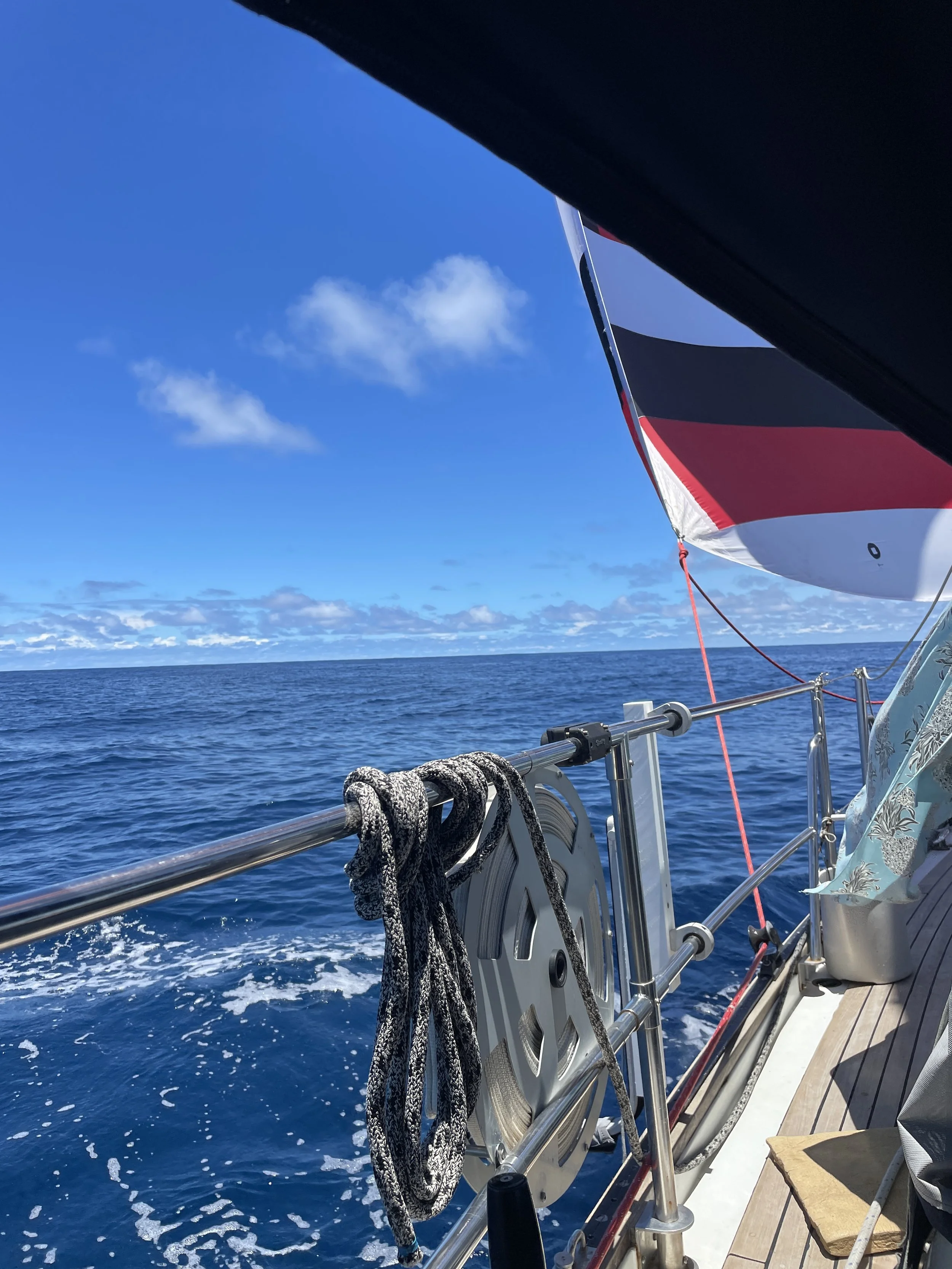
We basically forgot about house loads. The fridge ran all the time. So did the autopilot and the electronics. We rarely turned a light off. The watermaker ran whenever the tanks needed it, about every two and a half days on our low-output unit.
The only load we thought twice about was air conditioning. Everything else, we just lived.
What went wrong
Two things, and neither one was the motor.
A coupling failed on an aftermarket gearbox. Not a Powerflow part, but a good reminder that every link in the driveline matters.
Compass interference. The phase cables and DC cables ran too close to the autopilot compass.
What didn't go wrong: more than once we absolutely needed the motor to work, right then, to get out of a bad spot. It turned on every single time.
Why we left without a generator
Our 48V DC generator was already on the drawing board. We chose to go without it anyway, for two reasons.
First, two seasons in the Sea of Cortez had shown us the range was there if we were willing to go slow and plan departures more carefully. In the trade winds we were happy to motor-sail at a slow pace when the sea state got sloppy.
Second, I wanted to prove it could be done, to myself and to anyone thinking about going electric. If the generator had been on board, I would have used it because it was there, not because we needed it. Leaving it behind was the only honest test.
Today the Powerflow DC generator is built and available for owners who want more range. The crossing proved it's an option, not a requirement.
What it proved
The best part wasn't the numbers. It was sneaking in and out of anchorages with no exhaust splashing and no diesel rumble. We'd take people out and leave an anchorage without them knowing the motor was even on.
I barely open the floor boards anymore. There's nothing in there that needs looking at.
An electric boat can cross an ocean. It takes a system sized for the boat, a bank big enough to be patient with, and a skipper willing to go slow when the wind quits. That's what we build: four to six conversions a season, each one engineered like we'll be the ones sailing it.